From Dubai Mall to Noon: How Chinese Brands Merge Online and Offline in the Middle East
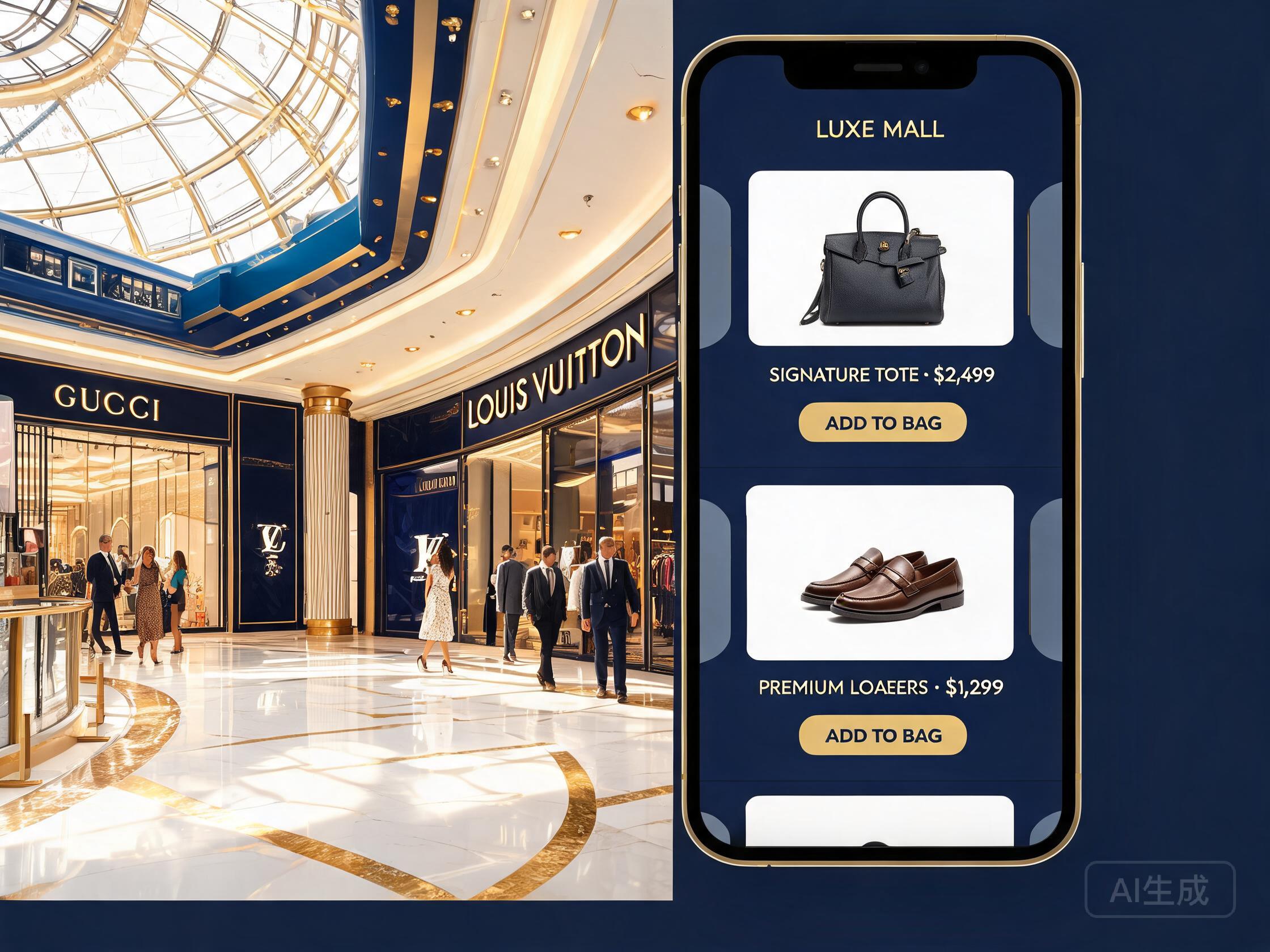
According to public sources, the number of Chinese brand counters inside Dubai Mall has grown approximately 320% over the past three years. From scattered mobile accessory kiosks to brand matrices spanning consumer electronics, smart home, beauty, and personal care, Chinese brands are visibly “claiming” the Middle East's largest offline retail landmark. However, high offline rents and operating costs—public data shows Dubai Mall annual rents at approximately US$ 2,000-4,000 per square meter—put many brands in a “can see, can't enter” predicament. How can brands maximize brand momentum with limited offline investment? The answer lies in the OMO (Online-Merge-Offline) model: using offline experience to build trust, and online conversion to achieve scale.
1. The Offline Dilemma: Light and Shadow of Dubai Mall
In Middle Eastern consumer perception, having a counter in top-tier shopping destinations like Dubai Mall or Mall of the Emirates is itself an endorsement of brand strength. According to public surveys, 67% of Middle Eastern consumers believe that “brands with physical stores in major malls are more trustworthy.” The value of offline counters extends beyond immediate sales conversion to brand building—consumers can touch products, experience functionality, and interact face-to-face with staff, providing depth that online channels cannot replace.
However, the cost of offline is equally steep. At Dubai Mall, a 20-30 square meter counter costs approximately US$ 60,000-120,000 annually in rent. Including staff, renovation amortization, and inventory carrying costs, total annual investment typically reaches US$ 150,000-250,000. For a brand with US$ 1-2 million in annual sales, offline counter costs consume 10-15% of revenue, severely compressing margins. More critically, the offline reach is limited—Middle Eastern consumers concentrate mall visits on weekends, causing extreme foot traffic volatility.
Core insight: The value of offline counters lies in “brand endorsement + experience touchpoint,” not “sales channel.” Brands should treat offline investment as marketing expense rather than channel cost, using offline experience to drive online conversion and achieve OMO closure.
2. The OMO Model: A Four-Step Flywheel of Offline Experience × Online Conversion
Step 1—Offline experience store as “brand showroom.” Select high-footfall malls for compact experience stores (10-15 sqm suffices). The core objective is not offline transactions but enabling consumers to experience products, scan codes to follow brand social media, and direct them to online stores. Public case studies show that brands adopting the “showroom model” achieve 25-35% offline-to-online conversion rates.
Step 2—Social media captures offline traffic. After scanning codes at experience stores, consumers are guided to brand Instagram or TikTok profiles for ongoing engagement through content operations. Middle Eastern consumers' social media dependency is exceptionally high—public data shows Instagram daily usage in Saudi Arabia and the UAE exceeds 2.5 hours, and TikTok over 3 hours. Brands can use short-form video content to showcase product scenarios, launch limited-time offers, and run interactive campaigns—converting offline “one-time experiences” into online “ongoing engagement.”
Step 3—E-commerce platforms capture conversion. When consumers are nurtured on social media, they complete purchases through Noon, Amazon.sa, or brand DTC sites. Public data shows the “social media discovery → e-commerce purchase” conversion rate in the Middle East is approximately 3-5%, higher than the global average of 2-3%. This advantage stems from Middle Eastern consumers' higher purchasing power and shorter “decision hesitation periods”—once trust is established, purchase decisions are rapid.
Step 4—Private domain cultivation drives repurchase. Guide purchasers to WhatsApp groups or brand App membership systems, using exclusive member offers and early access to new products to drive repurchase. Public case studies show private domain repurchase rates in the Middle East can reach 35-45%, far exceeding public e-commerce platforms' 15-20%. WhatsApp is the dominant messaging tool in the Middle East—public sources indicate UAE WhatsApp penetration exceeds 95%, making it the optimal private domain operations platform.
3. Social Commerce: Instagram and TikTok Shop Playbook for the Middle East
Instagram is the primary brand-building platform in the Middle East. Public data shows Saudi Instagram monthly active users exceed 25 million, and the UAE over 5 million. Brand Instagram content strategy should focus on three directions: product scenario short videos (Reels), KOL seeding collaborations, and user-generated content (UGC) reposts. Public data indicates Instagram Reels' average engagement rate in the Middle East is 3.8%, surpassing the global average of 2.5%.
TikTok Shop is the new variable in Middle Eastern social commerce. After launching in Saudi Arabia in 2023, TikTok Shop experienced explosive growth—public sources indicate 2024 TikTok Shop Middle East GMV grew over 500% YoY. TikTok Shop's core advantage lies in “content-as-commerce”—consumers can purchase directly while watching short videos or livestreams, without redirection. For Chinese brands, TikTok Shop's operational logic closely mirrors Douyin e-commerce, enabling rapid transfer of team experience and supply chain capabilities.
For KOL selection, brands should adopt a “pyramid” strategy: 1-2 top-tier KOLs (1M+ followers) for brand awareness bursts, 5-10 mid-tier KOLs (100K-1M followers) for deep seeding, and 30-50 bottom-tier KOCs (10K-100K followers) for word-of-mouth saturation. Public case studies show this pyramid investment structure delivers 3-5x higher ROI in the Middle East compared to pure top-tier KOL investment.
4. OMO Actionable Recommendations for Chinese Brands
Recommendation 1—Keep offline investment “lightweight.” Don't chase large counter spaces—a compact 10-15 sqm experience store suffices for brand display and product trial. Choose high-footfall but relatively cost-controlled malls like Dubai Mall, Mall of Arabia, and Riyadh Park.
Recommendation 2—Make online conversion “data-driven.” Set up tracking for every touchpoint in offline experience stores—QR code follows, WiFi login, trial registrations—digitizing offline traffic to build a complete “offline touchpoint → online conversion” data pipeline.
Recommendation 3—Make social media “localized.” Middle Eastern social media content requires deep localization—use Arabic (not English), respect cultural norms (e.g., modest attire for female appearances), and align marketing rhythms with local holidays (Ramadan, Eid al-Fitr, National Day).
Recommendation 4—Make private domain operations “WhatsApp-first.” Use WhatsApp as the core private domain tool, leveraging WhatsApp Business API for automated messaging, order notifications, and customer service. Public data shows WhatsApp message open rates in the Middle East exceed 90%, far surpassing SMS (30%) and email (20%).
Conclusion: In the Middle East, offline and online are not an “either-or” question but a “multiplication” equation. Chinese brands that use offline experience to build trust, social commerce to drive traffic, e-commerce platforms to capture conversion, and WhatsApp private domain to cultivate repurchase can achieve breakthroughs in both brand momentum and sales scale with limited investment. The core of the OMO model is not channel stacking but placing the consumer at the center—ensuring every touchpoint creates value for the next.