Africa's E-Commerce Frontier: Opportunities and Challenges in Nigeria and Kenya
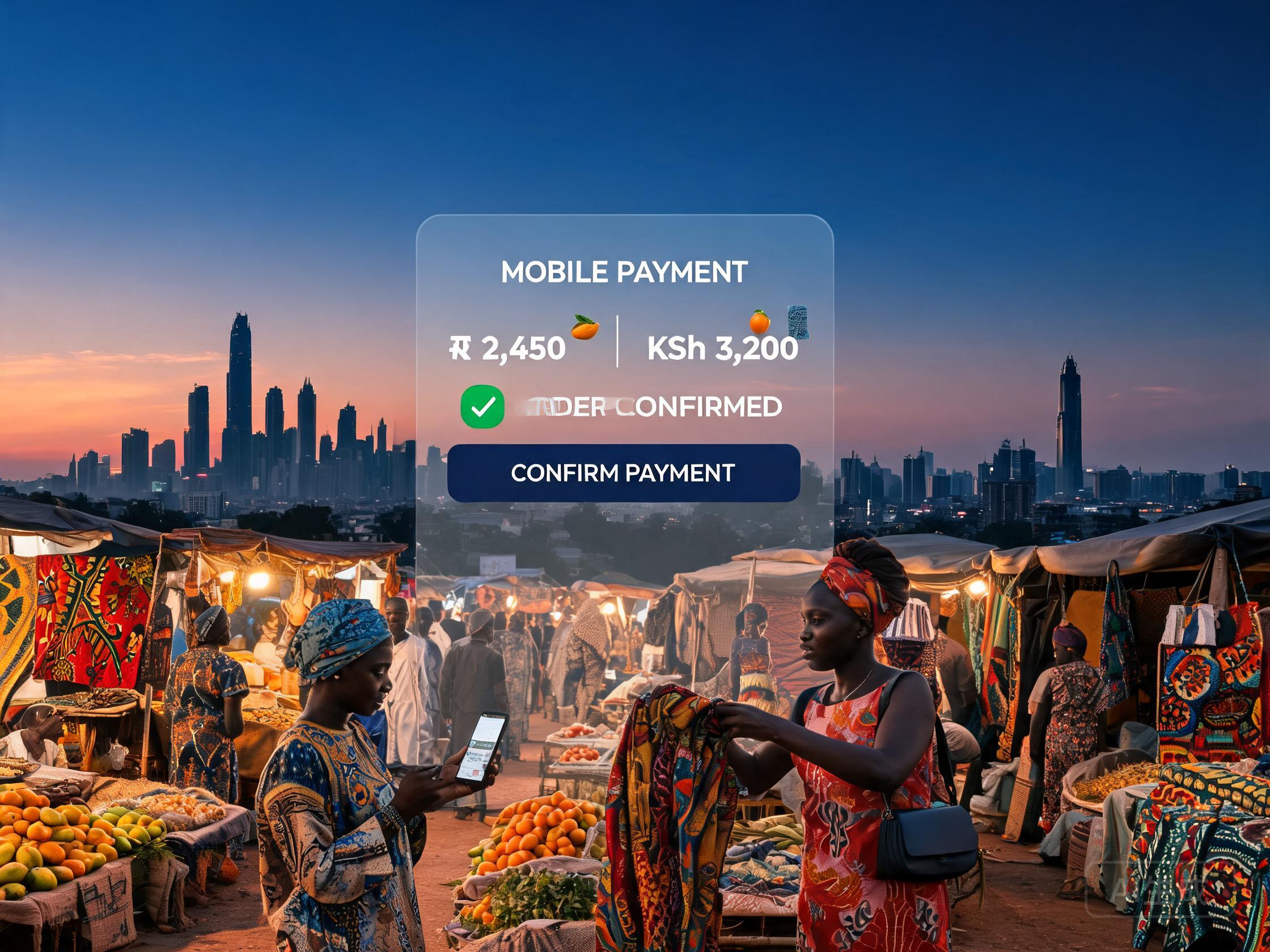
While most Chinese brands focus their overseas expansion on the GCC six nations, Sub-Saharan Africa—a continent of 1.2 billion people with a median age of just 19—is quietly nurturing the next e-commerce explosion. According to public sources, the African e-commerce market was valued at approximately US$ 40 billion in 2023 and is projected to exceed US$ 80 billion by 2027, with a compound annual growth rate above 20%. Although current e-commerce penetration is only about 3%, the rapid proliferation of mobile payments is laying the “last mile” infrastructure for an e-commerce breakout. This article focuses on Africa's two core markets—Nigeria and Kenya—providing an in-depth analysis of market characteristics, opportunities, and challenges, with a practical “enter first, then deepen” roadmap for Chinese brands.
1. Nigeria: Potential and Pain Points of Africa's Largest E-Commerce Market
Nigeria is Africa's most populous nation, with over 220 million people and approximately 110 million internet users—Africa's largest internet market. According to public data, Nigeria's e-commerce market is valued at approximately US$ 7-8 billion, accounting for 35-40% of Africa's total e-commerce market. Jumia (Africa's largest e-commerce platform), Konga, and Amazon's newly entered Amazon.ug all view Nigeria as a core battleground.
Nigeria's core advantages lie in demographic dividends and consumer willingness. Public sources show that 55% of Nigeria's population is under 25—a youth demographic structure implying a high proportion of digital natives and significant online consumption potential. Meanwhile, Nigeria's middle class (those spending US$ 2-20 daily) numbers approximately 40 million, with rapidly growing demand for quality consumer goods.
However, Nigeria's market pain points are equally prominent. Logistics infrastructure is the biggest bottleneck—public data shows Nigeria's last-mile delivery costs represent 15-25% of order value, far exceeding the global average of 5-10%. The incomplete address system is the core reason for high logistics costs—many areas lack standardized street addresses, requiring couriers to contact recipients by phone for location confirmation. Additionally, the Nigerian Naira (NGN) has experienced significant exchange rate volatility, depreciating over 40% during 2023-2024, posing challenges for cross-border brand pricing and profit management.
Key strategy: Nigeria suits a “light model” entry. Chinese brands should first test category demand through Jumia, leveraging its logistics network and Cash on Delivery (COD) system to address fulfillment challenges, then consider building independent stores or local warehouses after successful validation.
2. Kenya: The “Silicon Valley” of Mobile Payments and an E-Commerce New Force
Kenya is often called the “Silicon Valley of Africa” and is a pioneer in global mobile payments. According to public data, M-Pesa (Vodafone's mobile payment platform) has over 30 million users in Kenya, representing over 60% of the population. Mobile payment penetration exceeds 80%, far surpassing Nigeria's approximately 10%. This payment infrastructure maturity provides a natural advantage for e-commerce development.
Kenya's e-commerce market is valued at approximately US$ 1.5-2 billion—smaller than Nigeria's but growing more rapidly. Public sources indicate Kenya's e-commerce market grew at an annual rate of 25-30% during 2023-2025, outpacing Nigeria's 15-20%. Jumia, Kilimall (a Chinese-founded African e-commerce platform), and Wasoko (a B2B e-commerce platform) are the main players in the Kenyan market.
A notable characteristic of Kenyan consumers is their high receptivity to “social commerce.” Public surveys show that approximately 60% of Kenyan online consumers discover and purchase products through Facebook, Instagram, or WhatsApp. This “social discovery + social payment” consumption pattern shares similarities with China's lower-tier market “community group buying” logic, providing Chinese brands with a social-driven, low-CAC customer acquisition path.
3. Logistics and Payments: The Two Infrastructure Imperatives of African E-Commerce
Logistics is the biggest bottleneck for African e-commerce. Public data shows that logistics costs represent 12-20% of Africa's GDP—2-3 times the global average. Cross-border logistics is even more complex—sea freight from China to Africa's east coast takes approximately 25-35 days, and including customs clearance and inland transport, the total cycle can reach 40-60 days. Brands are advised to adopt a “sea freight trunk route + local warehouse + crowdsourced last mile” model, leveraging Jumia Logistics or third-party logistics providers for last-mile delivery.
On the payments side, Cash on Delivery (COD) still dominates African e-commerce. According to public sources, COD accounts for approximately 60-70% of Nigerian e-commerce transactions and 40-50% in Kenya. The primary risk of COD is high return rates—Nigeria's COD return rate is approximately 15-25%, incurring additional logistics costs for brands. However, with mobile payment proliferation, digital payment ratios are rising rapidly. Kenya, thanks to M-Pesa, has digital payments exceeding 50%; Nigeria, driven by local payment gateways like Paystack and Flutterwave, is also accelerating digital payment adoption.
4. A Practical Roadmap for Chinese Brands Entering Africa
Phase 1 (0-3 months): Market Testing. List products simultaneously on Jumia in Nigeria and Kenya to test category demand and price elasticity. Focus on high-demand categories such as 3C accessories, home goods, and beauty/personal care. Use Jumia's Fulfillment service for logistics and COD, reducing initial investment risk.
Phase 2 (3-6 months): Social Commerce Pilot. Establish brand accounts on Instagram and Facebook, creating content in English (common in East Africa) and Swahili (one of Kenya's official languages). Collaborate with local KOCs, using WhatsApp groups to capture social traffic, testing the “social discovery → WhatsApp private domain → Jumia/DTC conversion” loop.
Phase 3 (6-12 months): Localized Deepening. After validating categories and channels, consider establishing small local warehouses in Lagos (Nigeria) or Nairobi (Kenya), compressing delivery cycles from 7-14 days to 2-5 days. Register local companies and integrate digital payment gateways like Paystack/Flutterwave to reduce COD ratios and return rates.
Phase 4 (12 months+): Regional Expansion. Using Nigeria and Kenya as dual pivots, radiate to Ghana (West Africa) and Tanzania and Uganda (East Africa). Leverage AfCFTA (African Continental Free Trade Area Agreement) tariff benefits to reduce cross-border trade costs.
Conclusion: Africa is not “the next Southeast Asia”—it has unique infrastructure conditions, consumer culture, and market structure. Chinese brands entering Africa need not simple model replication but a long-term “enter first, then deepen” mindset. Using platforms to test demand, social commerce for low-cost acquisition, local warehouses for optimized fulfillment, and mobile payments for risk reduction—this four-step strategy will help Chinese brands find their rooting space in Africa's e-commerce frontier.